
An Evidence-Based Guide to Substance Use Prevention, Recovery, Healthy Coping, and Sustainable Change.
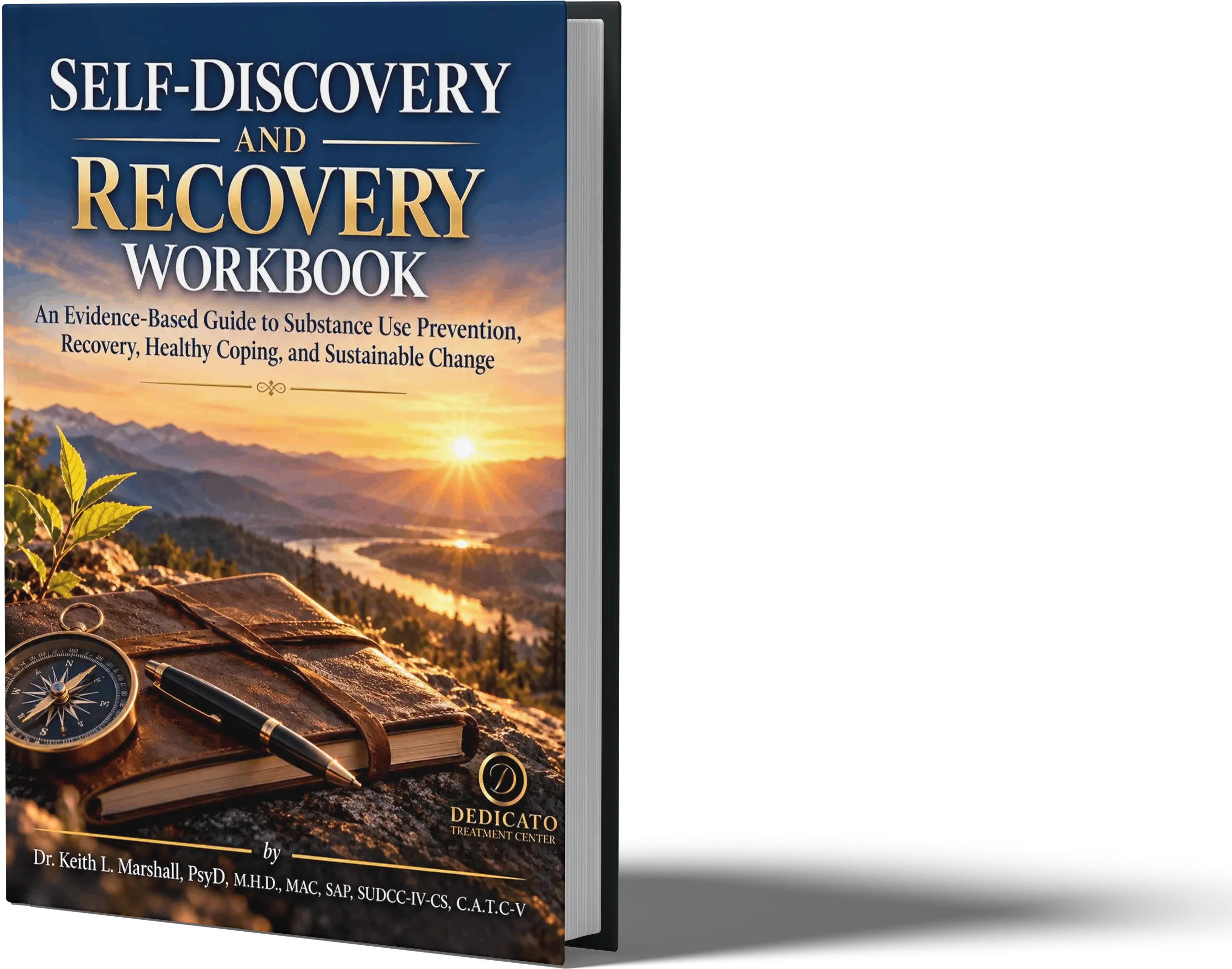

The Self-Discovery and Recovery Workbook is an evidence-informed, practical guide designed to help individuals move beyond simply stopping unhealthy behaviors and begin understanding the thinking, experiences, choices, and patterns that drive them. Through guided self-examination, the workbook addresses substance use and relapse prevention, denial, triggers, cognitive distortions, emotional regulation, self-esteem, relationships, social support, healthy coping, personal responsibility, and spiritual awareness—helping individuals become active participants in their own recovery and personal growth.
Built around Dr. Marshall’s principle that honesty is the taproot of recovery and meaningful change, the workbook uses Introspection, Retrospection, and Correction to help individuals look within, understand what has shaped them, and intentionally change what is within their power to change. Designed for independent use or collaborative work with counselors, therapists, peer-support professionals, and treatment teams, it transforms self-discovery into action—because sustainable recovery requires more than talking about change; it requires actively participating in it.
Self-Discovery and Recovery Workbook is an evidence-informed, structured tool designed for counselors, therapists, peer-support professionals, substance use professionals, and other helping professionals to work collaboratively with individuals recovering from substance use disorders, strengthening substance use prevention, addressing negative behavioral patterns, and challenging unhealthy patterns of thinking. The workbook may also be used independently by individuals
who are prepared to engage in meaningful self-examination and have the capacity to be rigorously honest with themselves. Although working with another person can be extremely valuable—because others can often help us recognize what we may be unable or unwilling to see in ourselves—an individual who is willing to engage honestly in the process can also complete this work independently.
At the heart of this workbook is a fundamental principle: honesty is the taproot of recovery and meaningful change. Recovery requires more than simply stopping substance use or making intermittent, precarious, negative behavioral changes. Sustainable change requires a willingness to examine oneself honestly, recognize unhealthy patterns and distorted thinking, accept personal responsibility, develop healthier coping skills, and learn to deal with life on life’s terms without returning to substances or destructive behaviors as the solution. CIVILIAN_WORKBOOK_NUMBERED_VERI…
A central framework of the workbook is Introspection, Retrospection, and Correction— looking honestly within ourselves, looking back to understand the experiences, thinking, choices, behaviors, and patterns that have influenced our lives, and then using that understanding to make meaningful corrections moving forward. The purpose is not self-blame. It is to develop greater self-awareness, accountability, emotional regulation, healthier coping, and responsibility for those areas of our lives that we have the ability to change.
The workbook can be incorporated into treatment and recovery planning because it addresses core areas of sustainable recovery and behavioral change, including relapse prevention; identification of internal and external triggers; breaking patterns of denial, such as minimization, avoidance, and rationalization; recognizing cognitive distortions and unhealthy thinking; developing healthy coping skills; strengthening self-esteem and personal responsibility; building social support; understanding sponsorship and mentorship; examining powerlessness and restoration to sanity; and exploring faith and spiritual awareness. Through guided reading, writing, self-assessment, reflection, discussion, and practical assignments, individuals are encouraged to move beyond passive participation and become proactive participants in their own recovery, personal growth, and human development. CIVILIAN_WORKBOOK_NUMBERED_VERI…
This workbook also reflects Dr. Marshall’s own perspective from both sides of recovery—his lived experience with severe addiction and recovery and his subsequent education and professional career in behavioral health and addiction treatment. Readers can learn more about his journey in the “About the Author & Personal Journey” section at the back of the workbook. CIVILIAN_WORKBOOK_NUMBERED_VERI… After years of developing and utilizing these tools, Dr. Marshall has personally witnessed, alongside other clinicians, the profound impact that structured and honest self-examination can have in helping individuals recognize unhealthy patterns, move beyond blame, take greater responsibility for their lives, and develop the courage to make meaningful and sustainable changes.
The purpose of this workbook is to provide structure, direction, accountability, and meaningful work that helps move an individual from merely talking about change to actively participating in it—through Introspection, Retrospection, and Correction.