Understanding an outpatient drug addiction treatment program
If you are looking for structured help with drug addiction but are not able or ready to enter residential rehab, an outpatient drug addiction treatment program can provide a realistic path forward. In outpatient care, you attend scheduled therapy and support sessions while continuing to live at home and maintain work, school, or family responsibilities. This flexibility is one of the main reasons many people choose outpatient care for substance use disorders [1].
In an outpatient setting, you still receive evidence based treatment, individual and group therapy, and in some cases medication support. The difference is that you return home after each visit instead of staying overnight. For many, this creates a balance between accountability and independence, which can support long term recovery.
If you are specifically interested in a structured program that does not require living on site, you may also want to explore options for drug rehab without inpatient stay as you read.
Types of outpatient drug rehab programs
Outpatient drug addiction treatment is not one single format. Instead, it is a spectrum of care levels that vary in intensity, time commitment, and support. Understanding these options helps you choose a program that matches the severity of your addiction, your home environment, and your schedule.
Standard outpatient programs (OP)
Standard outpatient programs typically involve fewer than 9 hours of treatment per week. You might attend one or two individual counseling sessions and one group therapy session each week. This level of care often works best if you:
- Have mild to moderate symptoms
- Have already completed a higher level of care
- Have a stable home and reliable support system
Standard outpatient care provides ongoing therapy and accountability while giving you significant freedom in your daily routine. Many people use this level as part of outpatient treatment for substance abuse recovery after completing more intensive programs.
Intensive outpatient programs (IOP)
Intensive outpatient programs, or IOPs, are a step up in structure. Sessions generally run about 3 hours a day for 3 to 5 days a week [1]. IOPs focus on relapse prevention, psychoeducation, individual and group counseling, and building skills that support long term sobriety [1].
An IOP may be appropriate if you:
- Need more support than standard outpatient therapy can offer
- Are transitioning from residential or partial hospitalization care
- Want to stay at home while receiving frequent, structured treatment
Because you attend multiple sessions per week, you spend a significant amount of time in treatment while still living at home and possibly continuing part time work or school.
Partial hospitalization programs (PHP)
Partial hospitalization programs, or PHPs, provide the highest level of outpatient care. These programs usually involve 5 to 6 hours of treatment per day, 5 to 6 days per week [1]. In many ways, PHPs resemble residential rehab during the day, but you still return home at night.
PHP can be a good fit if you:
- Have moderate to severe addiction
- Need close monitoring but not 24 hour medical supervision
- Have a home environment that is stable and supportive
This level of care focuses on stabilization, intensive therapy, and preparation for step down to IOP or standard outpatient care.
Outpatient detoxification programs
If you have mild to moderate withdrawal symptoms and are medically stable, outpatient detoxification may be an option. Outpatient detox typically involves regular visits to a clinic for monitoring, medication management, and support, rather than the continuous medical observation you would have in inpatient detox [1].
Outpatient detox can be appropriate if:
- You are not at high risk for severe or life threatening withdrawal
- You have safe housing and someone who can check on you
- You can reliably attend scheduled appointments
Some programs, such as those described by Providence Treatment, offer outpatient detox within a broader outpatient rehab plan, especially for people who are not at high risk of severe withdrawal complications [2].
What works in outpatient drug rehab
An effective outpatient drug addiction treatment program has several core elements. These components are supported by research and clinical experience, and they are often what distinguish programs that help you build a lasting recovery from those that offer only short term symptom relief.
Evidence based therapies
Therapies that have been studied and shown to help people change their relationship with substances are a foundation of successful outpatient care. Common evidence based approaches include:
- Cognitive Behavioral Therapy (CBT), which helps you recognize and change the thought patterns and behaviors that contribute to drug use
- Dialectical Behavior Therapy (DBT), which focuses on emotion regulation, distress tolerance, and interpersonal effectiveness
- Motivational Interviewing (MI), which strengthens your own motivation and commitment to change
Outpatient programs often combine these therapies to address both substance use and underlying emotional or mental health challenges [3]. If you are looking for more details on therapy options, it may help to read about therapy for drug addiction outpatient.
Individualized treatment planning
No two people experience addiction in the same way. Effective programs begin with a comprehensive assessment of your history, substance use pattern, mental health, medical status, and social situation. From there, you work with clinicians to create an individualized plan that may include:
- Frequency and type of therapy sessions
- Medication needs
- Family involvement
- Specific relapse prevention strategies
Programs that tailor treatment to your needs tend to be more effective, especially when they adjust the plan over time as you make progress or encounter new challenges [3].
Strong support systems
Outpatient treatment depends on what you do when you are not in session. Having support at home and in your community can significantly influence your outcomes. Research suggests that outpatient programs are especially effective for people with a strong support system and less severe addiction [3].
Support can include family members, close friends, recovery groups, sponsors, and mental health professionals. When your treatment team helps you involve supportive people and connect with peer communities, you have more resources to draw on when cravings or triggers show up.
Medication assisted treatment (MAT) when appropriate
If you are dealing with opioid or alcohol addiction, medication assisted treatment can be a critical part of what works. MAT combines FDA approved medications with counseling and behavioral therapies to reduce cravings, ease withdrawal, and lower your risk of relapse [3].
In outpatient settings, MAT is often integrated into ongoing therapy and group work. Your providers monitor your response, adjust dosages, and help you build coping skills alongside medication support.
Structure, consistency, and accountability
Effective outpatient programs provide a clear schedule and expectations. Whether you attend three evenings a week or nearly full time days, the structure helps you:
- Build new routines that do not center on substance use
- Stay accountable to your goals and your treatment team
- Practice recovery skills consistently, not only when you feel motivated
If you are seeking a program that combines structure with flexibility, you might explore options for a structured outpatient drug recovery program or a flexible drug rehab program that can adapt to your work or family duties.
What does not work in outpatient rehab
Just as it helps to know what works, it is important to understand common patterns that make outpatient drug addiction treatment less effective. Recognizing these issues early can help you avoid them or address them with your treatment team.
Insufficient level of care
If your addiction is severe, if you have repeated relapses, or if you are at high risk for complicated withdrawal, standard outpatient care may simply not be enough. Trying to manage severe addiction with only a few hours of therapy each week can leave you without the structure and monitoring you need.
In these situations, you may benefit from starting with a higher level of care, such as inpatient rehab, PHP, or IOP, and then stepping down as you stabilize. Programs that follow the American Society of Addiction Medicine (ASAM) criteria, like Atlanta Recovery Place, often recommend outpatient treatment for people with low withdrawal risk, strong motivation, and stable environments [4].
Unstable or unsafe home environment
Outpatient care depends on your ability to return to a home that does not undermine your recovery. If you live with people who use substances, if your living situation is unsafe, or if you face constant stress and conflict, it can be difficult to make progress, even in a strong treatment program.
In those cases, residential care, sober housing, or other supportive living arrangements may be more appropriate at least in the early stages of recovery.
Lack of engagement and follow through
Outpatient programs only work when you show up and take part. Common barriers include:
- Skipping sessions or leaving early
- Avoiding difficult topics in therapy
- Not completing assigned recovery tasks or homework
Some of this can come from ambivalence about change, which is common in addiction. Working with providers trained in Motivational Interviewing can help you explore and strengthen your commitment to recovery, rather than relying on pressure or willpower alone.
Ignoring co occurring mental health needs
If you live with depression, anxiety, trauma, or another mental health condition alongside substance use, focusing only on the addiction often does not work. Untreated mental health symptoms can trigger cravings, increase relapse risk, and make it harder to engage in therapy.
Effective outpatient programs assess and treat co occurring disorders with integrated mental health care. Programs that overlook this dimension may provide only partial relief.
Typical services in an outpatient program
While every outpatient drug addiction treatment program is different, many include a combination of core services. Together, these elements address the physical, emotional, and social aspects of addiction.
Individual counseling
You usually meet one on one with a licensed therapist to explore:
- Your history with substances and attempts to quit
- Triggers and high risk situations
- Underlying issues such as grief, trauma, or mental health concerns
- Coping strategies and tools to manage cravings and stress
Individual therapy in an outpatient setting gives you a private space to work through concerns that might feel too personal to share in a group.
Group therapy and psychoeducation
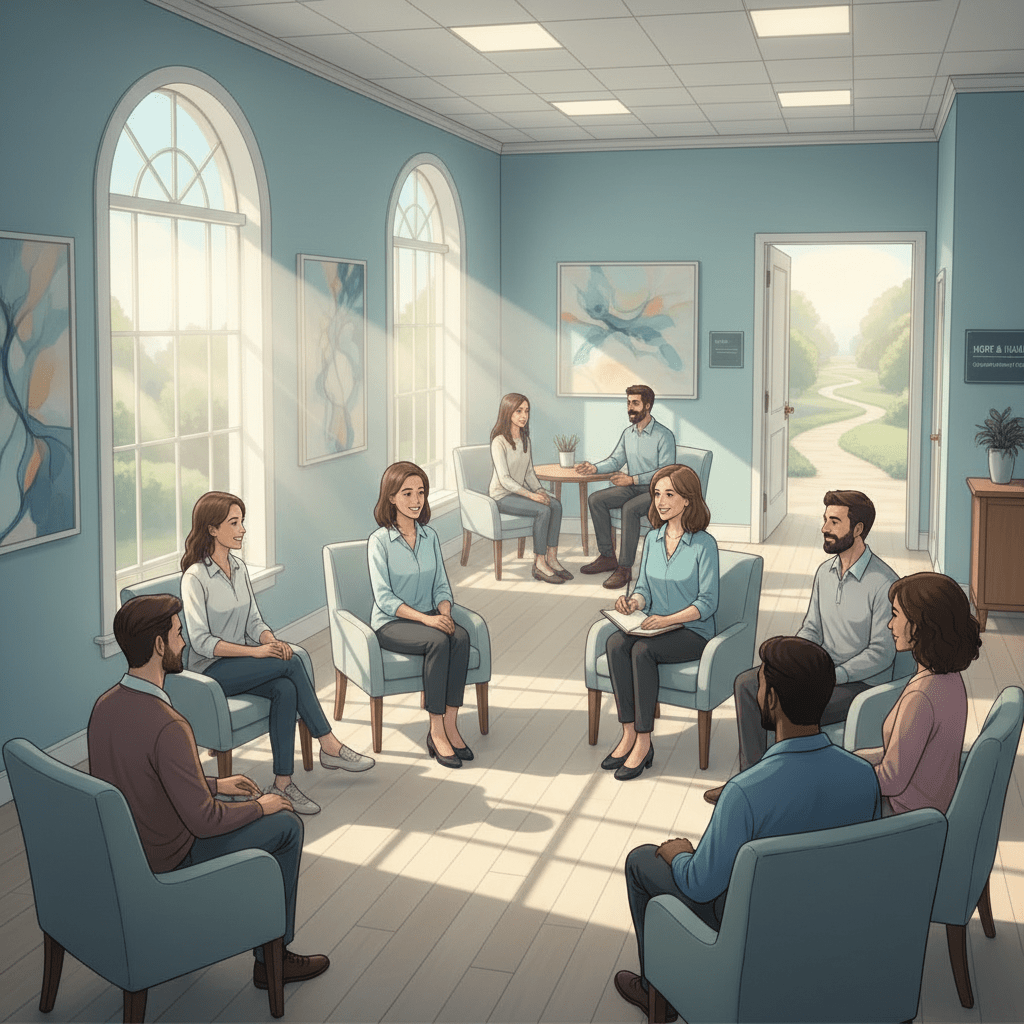
Group therapy is a central feature of many outpatient programs. In groups you can:
- Learn from others who are facing similar challenges
- Practice communication and coping skills in a safe setting
- Experience support, accountability, and a sense of belonging
Many programs offer psychoeducational groups that teach you about addiction, brain and body changes, relapse warning signs, and healthy lifestyle choices. Atlanta Recovery Place, for example, includes group therapy, life skills workshops, mindfulness practices, and relapse prevention education in its outpatient program [4].
Family and relationship support
Because you live at home during outpatient treatment, your family and close relationships are part of your recovery environment. Many programs offer:
- Family therapy sessions
- Education for loved ones about addiction and recovery
- Guidance on setting healthy boundaries
Involving family members can improve communication, reduce conflict, and create a more supportive home environment.
Relapse prevention planning
Relapse prevention is an ongoing process rather than a one time conversation. A strong outpatient program helps you:
- Identify your personal triggers
- Build coping strategies for cravings, stress, and difficult emotions
- Develop an emergency plan for high risk situations
- Connect with ongoing support after formal treatment ends
If relapse prevention is a priority for you, it may help to look for a dedicated drug relapse prevention outpatient program as part of your care.
Cost, insurance, and access
Concerns about cost are common when you are considering treatment. Outpatient programs are generally less expensive than inpatient rehab because you are not paying for housing and intensive 24 hour medical care [5].
What affects the cost of outpatient rehab
Several factors influence what you pay, including:
- Type and intensity of program, for example standard outpatient, IOP, or PHP
- Duration of treatment
- Therapies offered and whether they are medically intensive
- Location of the facility
Programs in areas with a higher cost of living, such as some parts of California, may charge more for services [5]. More medically intensive services, such as counseling combined with medication assisted detoxification, can increase the overall price [5].
Insurance coverage and financial help
Many outpatient drug addiction treatment programs accept insurance. Most insurance plans cover outpatient rehab to some degree, although your out of pocket costs depend on factors like in network status, deductibles, and visit limits [2]. If you are evaluating your options, resources on drug addiction treatment covered by insurance can be useful.
In addition, many programs offer:
- Sliding fee scales
- Payment plans or financing
- Help verifying insurance benefits
Low income individuals may qualify for free or reduced cost outpatient programs through nonprofit organizations or state funded rehabs, such as services offered by The Salvation Army [5].
Providers like Providence Treatment often emphasize that the personal and professional costs of untreated addiction are usually far higher than the cost of outpatient rehab and many will work with you to make treatment affordable [2].
National resources for finding care
If you are not sure where to start, you can contact SAMHSA’s National Helpline. This is a free, confidential, 24 hours a day, 7 days a week treatment referral and information service in English and Spanish [6]. The Helpline:
- Refers you to local treatment facilities, support groups, and community based organizations, including outpatient programs
- Does not require you to have health insurance
- Can connect you with state funded programs, sliding fee facilities, and providers who accept Medicare or Medicaid [6]
In 2020 the Helpline handled 833,598 calls, a 27 percent increase from 2019, which reflects the growing demand for treatment referrals, including outpatient services [6].
If you or someone you love is struggling with substance use, you can call SAMHSA’s National Helpline at 1 800 662 HELP (4357) for information on outpatient and other treatment options in your area.
Is outpatient rehab right for you
Choosing between outpatient and inpatient treatment is a significant decision. Outpatient care can be effective, especially when addiction is mild to moderate, when you have strong support at home, and when you can reliably attend sessions. Programs like those described by Atlanta Recovery Place are often recommended for people who have low withdrawal risk, high motivation, and a stable environment [4].
To decide whether an outpatient drug addiction treatment program fits your situation, it may help to ask yourself:
- Can you stay safe and substance free between sessions in your home environment
- Are you able to commit to the time requirements of the program
- Do you have medical or mental health conditions that might require more intensive monitoring
- Are you willing to participate actively in therapy and follow treatment recommendations
If you need more privacy or a setting tailored to your schedule and lifestyle, a private outpatient drug rehab or the best outpatient drug rehab program in your area may offer options that align with your needs.
Outpatient rehab is not a quick fix, but with the right level of care, evidence based therapies, and a strong support system, it can be a powerful way for you to rebuild your life while staying connected to your community and responsibilities.