Understanding dual diagnosis outpatient rehab
If you are living with both a mental health condition and a substance use disorder, you are not alone. An estimated 17 million adults in the United States have co occurring mental illness and substance use disorders, which means integrated care is not a luxury, it is a necessity [1].
When you look for the best dual diagnosis outpatient rehab, you are really looking for a program that can treat both conditions at the same time with equal seriousness. These programs are often called co occurring disorder treatment centers or integrated treatment programs. They bring together therapists, psychiatrists, medical providers, and recovery specialists to create one coordinated plan.
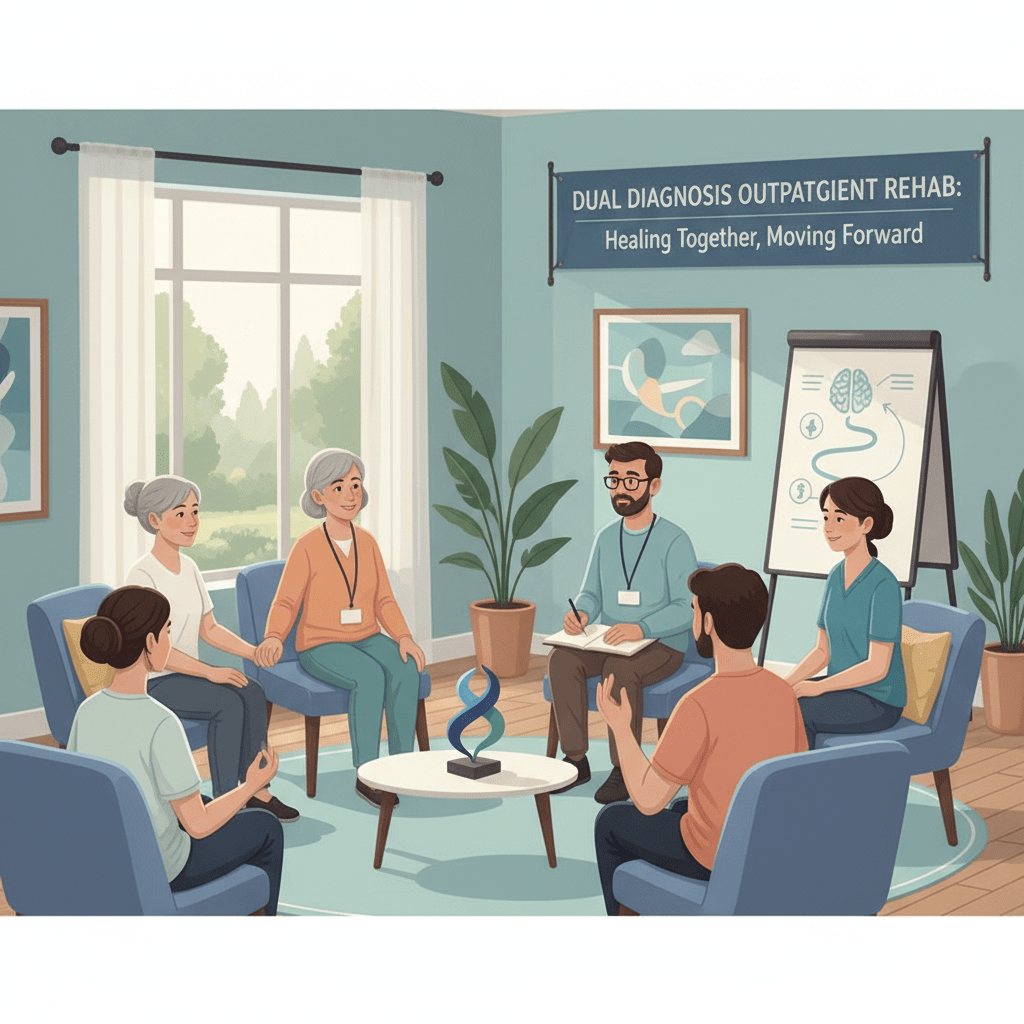
Outpatient care can be a strong fit if you need structured support but still have family, work, or school responsibilities. You attend therapy and medical appointments several times per week, then return home each day. The right outpatient dual diagnosis program helps you stabilize symptoms, reduce substance use, and build skills to manage both conditions in daily life.
Why treating both conditions together matters
Treating addiction without addressing mental health, or vice versa, rarely works for long. One condition tends to fuel the other. Anxiety or depression can lead you to use substances to cope. Substance use can worsen mood swings, trauma symptoms, or psychosis.
Research has consistently shown that integrated treatment, where both disorders are treated concurrently, leads to better outcomes than addressing each problem separately [2]. When your care team understands the full picture, they can:
- Adjust medications to account for substance use history
- Tailor therapy to address both cravings and mood or trauma symptoms
- Coordinate care so you are not getting conflicting messages from different providers
At many traditional programs, services for addiction and mental health are still split. A national study of 256 programs found that only 18 percent of addiction treatment programs and 9 percent of mental health programs were truly dual diagnosis capable [3]. This means you need to be selective so you do not end up in a setting that only partially addresses what you are going through.
Is outpatient dual diagnosis care right for you
Before you compare specific programs, it helps to decide if an outpatient level of care fits your current needs. You might see options like partial hospitalization (PHP), intensive outpatient (IOP), or standard outpatient. Each provides a different intensity of support.
Outpatient rehab is often appropriate if:
- You are medically stable and do not need 24 / 7 monitoring
- You can maintain safety with support and a crisis plan
- You have at least some stable housing or a safe place to stay
- You are willing to attend sessions consistently and participate
If your symptoms are severe, or you are rapidly cycling between crisis and relapse, a residential or inpatient program might be safer at first. For example, at Recovery Institute of Ohio in Cleveland, inpatient care is strongly recommended for many dual diagnosis patients because it offers round the clock support and comprehensive stabilization [4]. Once you are more stable, you can step down into an outpatient dual diagnosis outpatient treatment program for ongoing care.
If you are already in outpatient treatment but still struggling, you may benefit from a higher intensity level such as PHP or IOP rather than weekly therapy alone. Programs like Gateway Foundation offer a full continuum of care that ranges from detox and residential treatment to intensive outpatient and flexible outpatient rehab, which can help you move between levels as your needs change [5].
Core elements of the best dual diagnosis outpatient rehab
When you start comparing options, it is easy to get overwhelmed by websites and brochures. Focusing on a few core elements can help you quickly narrow down which centers are truly equipped to help you recover.
Integrated assessment and diagnosis
The best dual diagnosis outpatient rehab programs begin with a thorough, structured assessment. You should expect:
- A complete mental health evaluation
- A detailed substance use history
- Screening for trauma, medical issues, and risk factors
- Review of previous treatments and medications
Programs like the Recovery Institute of Ohio emphasize mental health evaluations that are specifically designed to identify co occurring disorders and guide customized treatment plans [4]. If the intake feels rushed or the provider focuses only on substances or only on mental health, that is a warning sign.
You can also look for programs that explicitly offer co occurring disorder treatment outpatient and treatment for co occurring mental health and addiction, which signals that they are prepared to take a comprehensive view of your situation.
Evidence based therapies for both conditions
Quality dual diagnosis care relies on therapies that have been studied and shown to work. Leading outpatient programs commonly provide:
- Cognitive behavioral therapy (CBT) to identify and shift unhelpful thinking patterns and behaviors related to both mood and substance use
- Dialectical behavior therapy (DBT) skills to help you tolerate distress, regulate emotions, and improve relationships
- Motivational interviewing to strengthen your own reasons for change rather than pushing you from the outside
- Trauma informed therapies that help you process painful experiences in a safe, gradual way
In Buffalo, New York, for instance, the best outpatient dual diagnosis rehabs use CBT, DBT, motivational interviewing, and trauma informed care together to support recovery from both mental health and substance use disorders [2]. Programs like Live Again Detox and Gateway Foundation also integrate multiple evidence based therapies, including mindfulness based approaches, trauma therapy, and relapse prevention [6].
If you are seeking help for a specific combination like depression and alcohol use, or anxiety and stimulant misuse, consider asking whether the center offers an outpatient program for depression and addiction or anxiety and substance abuse treatment outpatient so you know they have experience with your particular concerns.
Psychiatric care and medication management
For many people with co occurring disorders, medications are an important part of stabilizing symptoms. The best dual diagnosis outpatient rehab will include:
- Access to a psychiatrist or psychiatric nurse practitioner
- Careful medication evaluation with attention to substance use history
- Ongoing monitoring and adjustments based on how you respond
- Education about how medications and substances interact
Centers like Live Again Detox and Southeast Addiction Center in Nashville highlight the value of psychiatric evaluation and medication management alongside therapy and support groups [7]. This type of integrated psychiatric support helps you avoid medication conflicts and reduces the risk that untreated mental health symptoms will drive you back to substance use.
If a program does not offer in house psychiatric services, ask how they coordinate with outside prescribers. Effective integrated treatment for addiction and mental health requires communication between all members of your care team.
Individualized treatment planning
No two people experience dual diagnosis in the same way. Your history, strengths, culture, and living situation all shape what you need from treatment. Look for programs that:
- Build a personalized care plan with you, not just for you
- Consider your goals, values, and responsibilities
- Adjust the plan over time based on your progress
Southeast Addiction Center, for example, emphasizes ongoing individualized therapy and regular re evaluation to adjust treatment plans over time, since not every therapy works for every client [8]. Gateway Foundation also designs individualized, evidence based treatment plans for co occurring disorders across multiple levels of care [5].
At a strong program, your plan will typically combine:
- Individual therapy
- Group therapy focused on dual diagnosis
- Psychiatric care and medications, when appropriate
- Family or couples sessions
- Skills based groups for relapse prevention and emotion regulation
If you are looking for a structured outpatient setting, ask how the center tailors its dual diagnosis outpatient treatment program to different diagnoses, ages, or cultural backgrounds.
Strong recovery supports and aftercare
Addiction is a chronic condition with relapse rates between 40 and 60 percent, which is similar to other chronic illnesses like hypertension or diabetes [9]. This does not mean treatment fails. It means that long term management and support are essential.
The best dual diagnosis outpatient rehab will provide or connect you with:
- Peer and alumni support groups
- Ongoing individual or group therapy after you complete the main program
- Relapse prevention planning that includes mental health warning signs
- Linkages to community resources, 12 step or alternative groups, and medical providers
Live Again Detox highlights the importance of aftercare with ongoing therapy, support groups, and scheduled check ins to support long term recovery from both addiction and mental health disorders [10]. Gateway Foundation also notes that successful outcomes are closely tied to completing treatment and engaging in aftercare [11].
You can also strengthen your support network by engaging with a broader mental health and addiction treatment program that offers alumni activities, sober events, or ongoing skills groups.
How to evaluate quality and safety
Once you know what you are looking for, you can start evaluating specific programs. Not every center that labels itself as dual diagnosis is truly equipped to provide integrated care. Paying attention to the following factors will help you choose wisely.
Accreditation and licensing
Accreditation signals that a program meets external standards for quality and safety. Many top dual diagnosis outpatient rehabs hold accreditations from organizations such as:
- CARF
- The Joint Commission
For example, Live Again Detox is accredited by The Joint Commission and recognized by the American Society of Addiction Medicine, and Southeast Addiction Center is licensed by the Tennessee Department of Mental Health and Substance Abuse Services [7]. In Buffalo, leading outpatient centers often carry CARF or Joint Commission accreditation as well [2].
When you speak with a program, ask:
- Are you accredited, and if so, by whom
- Is your staff licensed in their respective disciplines
- Do you have specific training or certification in treating co occurring disorders
You can also look for programs that describe themselves as integrated or dual diagnosis capable and that use validated tools such as the DDCAT or DDCMHT indexes to measure and improve their dual diagnosis services [3].
Clinician expertise and staffing
The quality of your relationship with your treatment team often matters as much as the specific therapies used. Helpful questions to ask include:
- Do your clinicians specialize in dual diagnosis treatment
- How do therapists, psychiatrists, and medical staff coordinate care
- What is the typical caseload for individual therapists
- Do you offer separate groups focused on co occurring disorders
Programs that scored higher on dual diagnosis capability in research studies tended to have stronger clinical processes, better continuity of care, and more use of peer recovery supports [3]. When you speak to staff, pay attention to whether they seem comfortable discussing both addiction and mental health, or if they steer the conversation toward only one side of your experience.
Program structure and daily schedule
Not all outpatient programs look the same. Some are highly structured with multiple sessions per week, while others are more flexible. To gauge whether a program matches your needs, ask:
- How many hours per week does treatment involve
- What is the balance between group and individual sessions
- Are there specific groups for depression, trauma, or anxiety
- How long does the average person stay in the program
Gateway Foundation, for instance, offers intensive outpatient programs that provide structured therapy and medical support several times per week while still allowing you to maintain work or family responsibilities [5]. Southeast Addiction Center offers customizable outpatient treatment with the option to live at home or in safe on site housing [8].
If you are looking specifically for outpatient rehab for dual diagnosis, make sure the program’s schedule is realistic with your job or caregiving responsibilities. Overcommitting can increase stress and make it harder to stay engaged.
Environment and culture
You will do your deepest work in an environment where you feel safe, respected, and understood. Whenever possible, ask for a tour or attend an information session. Pay attention to:
- How staff speak to and about clients
- Whether the space feels clean, calm, and welcoming
- How group leaders respond to questions or distress
- Whether there is diversity among staff and clients
Centers that describe themselves as comfortable, healing, and community focused, such as Southeast Addiction Center and Live Again Detox, often emphasize a culture of safety and support as much as specific treatments [12]. You deserve care in a place that treats your whole self, not just your diagnosis.
Navigating costs and insurance coverage
Finances are one of the biggest barriers to getting care. In 2023, more than 95 percent of people in the United States who needed drug rehab did not receive it [9]. Understanding your insurance options can help you move forward without unnecessary financial stress.
How insurance typically works for dual diagnosis care
Several protections are in place to improve access to treatment:
- The Mental Health Parity and Addiction Equity Act requires most insurers to cover mental health and substance use treatment at the same level as medical and surgical care [1].
- Medicaid is the largest payer of mental health and substance use services in the U.S. and often covers all or part of dual diagnosis treatment, making it essential for many low income individuals [1].
- Medicare provides at least partial coverage for screenings, therapies, and outpatient programs that address both mental health and substance use disorders, especially for adults 65 and older or those with disabilities [1].
When you contact a program, ask if they can verify benefits for you and explain your out of pocket costs in plain language. It may also help to look into a dual diagnosis therapy program covered by insurance so you know from the outset that the center is experienced in working with your type of coverage.
Questions to ask about affordability
To avoid surprise bills, consider asking:
- Do you accept my insurance, Medicaid, or Medicare
- What are my expected copays, coinsurance, and deductibles
- Are there any extra fees for psychiatric services, medications, or testing
- Do you offer payment plans or sliding scale options
If you do not have insurance or your benefits are limited, you can contact SAMHSA’s National Helpline for free, confidential help finding state funded programs or centers with sliding fee scales that may include dual diagnosis outpatient rehab options [13].
You do not have to figure out costs alone. Admission teams, insurance advocates, and community resources can help you understand your options and reduce financial barriers to care.
Using national and local resources to find programs
Finding the best dual diagnosis outpatient rehab near you can feel like a full time job. Fortunately, you can lean on national tools and local directories to build a shortlist.
National helplines and locators
SAMHSA’s National Helpline provides:
- Free, confidential treatment referral and information 24 / 7, 365 days a year
- Support in English and Spanish
- Referrals to local mental health and substance use treatment facilities, including dual diagnosis outpatient rehab centers
- Connections to state funded programs or centers that accept Medicaid or Medicare [13]
You can call the helpline, use SAMHSA’s online treatment locator, or text your ZIP code to their HELP4U service to find nearby options. These tools help you identify programs that match your insurance, location, and level of care needs.
Regional examples of dual diagnosis care
You may also find it helpful to look at how integrated care works in different regions. For example:
- Recovery Institute of Ohio in Cleveland offers dual diagnosis treatment across residential, PHP, IOP, and outpatient levels, with individualized care plans for depression, PTSD, bipolar disorder, anxiety, and addiction [4].
- In Nashville, Live Again Detox and Southeast Addiction Center provide outpatient dual diagnosis programs that combine medical detox, psychiatric care, CBT, DBT, trauma informed counseling, and family therapy, with flexible schedules that allow you to keep up with work or family obligations [7].
- In Buffalo, there are 38 dual diagnosis treatment centers that address co occurring mental health and substance use disorders, many of which are accredited and accept commercial insurance, Medicaid, and Medicare [2].
These examples are not exhaustive, but they show you what to look for: integrated services, multiple levels of care, evidence based therapies, psychiatric support, and flexible outpatient options that match your day to day life.
Putting it all together and taking the next step
Choosing the best dual diagnosis outpatient rehab for you is not about finding a perfect program. It is about finding a setting where you feel seen as a whole person and where both your mental health and your substance use are treated with equal care.
As you move forward, you can:
- List your priorities. For example, integrated psychiatric care, evening groups, or experience with trauma.
- Use resources like SAMHSA’s helpline, local directories, and your insurance website to identify a handful of programs.
- Visit or call each center and ask about assessment, therapies, psychiatric services, accreditation, and costs.
- Consider whether the environment feels safe and supportive, and whether the schedule fits your life.
If you are ready to explore specific options, you might start by learning more about outpatient rehab for dual diagnosis or a comprehensive dual diagnosis outpatient treatment program that aligns with your needs. Taking this step is not a commitment to stay forever. It is simply a way to give yourself access to coordinated, clinically sophisticated care that recognizes how intertwined your mental health and substance use really are.
You deserve that level of attention and support, and with the right outpatient program, you can begin building a life that is not driven by symptoms or substances but guided by your own goals and values.
References
- (American Addiction Centers)
- (Recovery.com)
- (PMC – NCBI)
- (Recovery Institute of Ohio)
- (Gateway Foundation)
- (Live Again Detox, Gateway Foundation)
- (Live Again Detox, Southeast Addiction Center)
- (Southeast Addiction Center)
- (American Addiction Centers)
- (Live Again Detox)
- (American Addiction Centers, Gateway Foundation)
- (Southeast Addiction Center, Live Again Detox)
- (SAMHSA)