Understanding flexible intensive outpatient rehab
When you are ready to take recovery seriously but still have responsibilities at home, work, or school, a flexible intensive outpatient rehab program can offer the balance you need. It provides more structure and support than weekly therapy, yet it still lets you sleep in your own bed and stay engaged in daily life.
Intensive outpatient programs, often called IOP, typically involve at least 9 hours of treatment services per week, usually delivered in three 3 hour sessions that may be scheduled during the day or in the evening [1]. This level of care is designed for you if you need consistent accountability and clinical support, but you do not require 24 hour supervision.
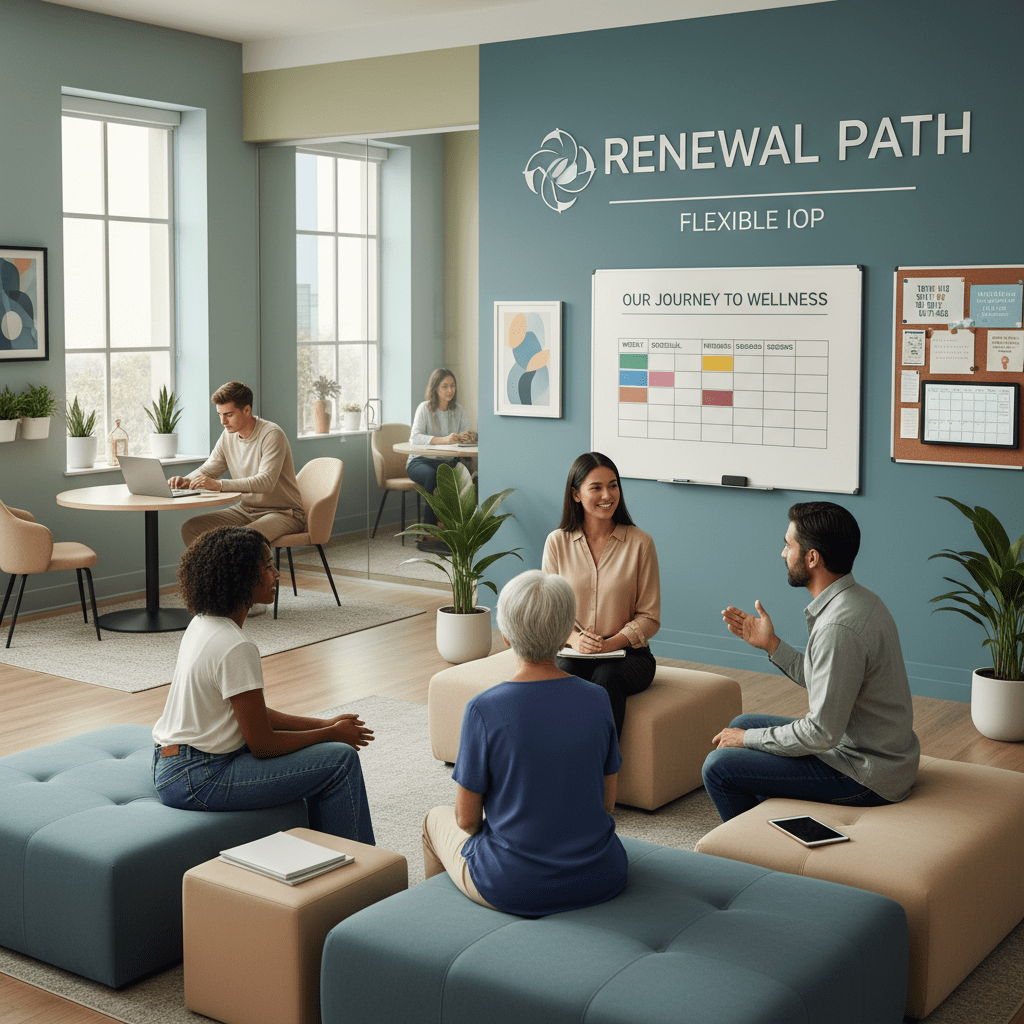
A flexible intensive outpatient rehab program focuses on both substance abuse and mental health. It lets you participate in frequent, structured therapy, while still honoring your commitments as a parent, professional, student, or caregiver. You are not choosing between your life and your recovery. You are choosing a model that supports both.
If you want a deeper overview of how IOP fits into the continuum of care, you can also explore an iop program for mental health and substance abuse.
How intensive outpatient programs work
Intensive outpatient programs follow a structured schedule that repeats each week. The goal is to give you enough frequency and intensity to create real change, while still allowing time for work, family, and rest.
Typical weekly structure
Most IOPs follow a pattern similar to this:
- At least 9 hours of treatment per week, usually in three 3 hour blocks
- Sessions scheduled on 3 to 5 days each week
- A mix of group therapy, individual counseling, and family or educational sessions
- Program length of 4 to 12 weeks, with some people continuing up to 6 months depending on your progress and needs [1]
The U.S. Substance Abuse and Mental Health Services Administration defines substance abuse IOPs as programs that provide a minimum of 9 hours of structured therapy each week, often in three 3 hour sessions, while allowing you to remain at home and in your community [2]. This balance of intensity and flexibility is what sets IOP apart.
What you work on in IOP
In a flexible intensive outpatient rehab program, you can expect to engage in:
- Individual therapy to address personal history, trauma, or co occurring mental health conditions
- Group therapy where you share experiences, receive feedback, and practice new skills
- Family sessions to rebuild trust and improve communication at home
- Psychoeducation on addiction, mental health, relapse prevention, and coping strategies
- Evidence based approaches like Cognitive Behavioral Therapy and Motivational Interviewing
- Skills practice such as mindfulness, grounding techniques, and communication skills
Many programs also integrate holistic or experiential elements, such as mindfulness and yoga, to support whole person recovery [3].
If you want to see how this structure can specifically support sobriety, you can review an intensive outpatient program for addiction.
Why flexibility matters in addiction treatment
One of the most compelling reasons to choose a flexible intensive outpatient rehab program is that it respects your real life. You may be willing to work hard on your recovery, yet unable to step away from your job or family for 30 to 90 days of residential treatment.
Balancing treatment and responsibilities
IOP is designed with this reality in mind. It allows you to:
- Continue working or attending school while in treatment
- Take care of your children or other dependents
- Stay connected to your existing support system
- Apply what you learn in therapy directly to your daily environment
Research highlights that IOPs let you practice coping strategies and relapse management in your actual home and community, which can improve adjustment to everyday life and strengthen long term recovery skills [2].
This model is especially helpful if you are transitioning from a higher level of care, such as residential treatment or a partial hospitalization program. You step down in intensity but maintain consistent, structured support, instead of suddenly going from 24 hour care to an occasional therapy appointment.
Flexibility and personal responsibility
A flexible IOP does not mean a loose or casual program. It means you get to show up as a responsible adult and integrate recovery into your existing life.
Intensive outpatient care encourages you to:
- Manage your schedule and arrive on time
- Practice new skills between sessions in real situations
- Take ownership of your treatment goals and follow through
Programs that emphasize this balance of structure and freedom help you build confidence that you can stay sober or emotionally stable without being removed from your life. This sense of agency is an important part of long term recovery [4].
If you are exploring options close to home, you can compare IOP to standard outpatient care through an iop vs outpatient rehab program.
Clinical effectiveness and outcomes of IOP
You may wonder whether an intensive outpatient program is really as effective as going to inpatient or residential rehab. Evidence suggests that for many people, it can be.
What the research shows
Multiple randomized clinical trials and quasi experimental studies from 1995 to 2012 have found that substance abuse IOPs are as effective as inpatient or residential treatment in reducing drug and alcohol use and improving abstinence rates [2].
Key findings include:
- IOP is the second most common level of addiction treatment in the United States, with 6,089 programs serving 141,964 patients in 2011, representing 44 percent of all addiction treatment programs [2]
- IOPs typically run longer than inpatient stays, which can extend the amount of time you are actively engaged in treatment
- For most individuals with substance use disorders, outcomes in IOP are comparable to those in higher intensity inpatient settings, making IOP a solid and cost effective option [2]
According to a National Institutes of Health study cited by Royal Life Centers at Chapter 5, between 50 and 75 percent of people treated for alcohol addiction through intensive outpatient programs remained abstinent without relapse after completing five days a week of treatment followed by weekly aftercare [3].
When inpatient might be more appropriate
There are situations where inpatient or residential treatment may be more suitable, at least at the beginning:
- You need medical detox or 24 hour medical monitoring
- You have severe or unstable mental health symptoms that require close supervision
- You have repeatedly relapsed in less intensive settings
A large U.S. study found that clients in residential programs were more than three times as likely to complete treatment compared with those in outpatient settings, including IOP, and this effect was especially strong for people with opioid use disorders [5]. This suggests that some high risk groups may benefit from starting in a more structured residential environment, then stepping down to IOP.
The key is to match the level of care to your needs. Many people use residential treatment and IOP in sequence as part of a full continuum of care.
Key features of a structured, flexible IOP
Not all intensive outpatient programs are the same. When you look for a flexible intensive outpatient rehab program that genuinely supports recovery, pay attention to both clinical depth and practical flexibility.
Evidence based therapies and integrated care
A high quality IOP will offer:
- Individual counseling to address personal issues, trauma, and co occurring diagnoses
- Group therapy focused on skill building, relapse prevention, and peer support
- Family sessions to repair relationships and strengthen your home support system
- Evidence based treatments such as Cognitive Behavioral Therapy and Motivational Interviewing
- Medication assisted treatment when appropriate, especially for opioid or alcohol use disorders [1]
Many programs, including Chapter 5 Recovery in Prescott, Arizona, use IOP to treat both substance use disorders and mental health conditions such as depression, anxiety, bipolar disorder, PTSD, and other co occurring disorders. They do this through integrated care that addresses both mental health and substance use at the same time [3].
If you are managing both addiction and mental health concerns, a structured iop for dual diagnosis treatment can help ensure that neither side of your experience is ignored.
Real life integration and skill practice
A structured IOP should give you frequent opportunities to:
- Learn coping skills during sessions
- Practice those skills in real life situations at home, work, or school
- Bring back your experiences to process what worked, what did not, and what to adjust next time
This loop of practice and feedback is one of the core advantages of intensive outpatient treatment. It lets you build a recovery plan that is tested and refined in the reality of your daily life, not only in a controlled treatment environment.
Programs like those described by PaRC BH emphasize that patients in IOP can actively apply behavioral and coping skills such as mindfulness and meditation in their real life environments, which strengthens the impact of treatment and boosts confidence in long term recovery [4].
If you are focused specifically on substance use, you may want to look into iop treatment for drug and alcohol addiction to see how this approach is applied.
Who benefits most from flexible IOP
You might be a good fit for a flexible intensive outpatient rehab program if you recognize yourself in one or more of these situations.
Professionals and working adults
If you are a professional or business owner, you might need treatment that does not require you to be away from your job for weeks at a time. Flexible IOP can be arranged around your workday, especially if evening or early morning options are available.
An evening iop program for professionals can help you maintain your income and career responsibilities while fully engaging in structured care. For many people, this reduces the stress and fear that can come with stepping into treatment.
Parents and caregivers
If you are a parent or caregiver, you may feel pulled in two directions. You know you need help, but you worry about being away from children or loved ones who depend on you.
Intensive outpatient programs let you return home each night so you can:
- Maintain your caregiving responsibilities
- Stay involved in your children’s routines
- Directly apply parenting and communication skills you learn in therapy
This connection can strengthen both your recovery and your family relationships, especially when the program includes family education and support. PaRC BH notes that IOPs support the strengthening of community and family relationships by encouraging patients to build and maintain support networks outside of treatment [4].
Transitioning from higher levels of care
If you have completed residential treatment or a partial hospitalization program, stepping straight down to weekly therapy can be too abrupt. IOP serves as a bridge, giving you:
- Ongoing structure and accountability
- A safe place to discuss new triggers in the community
- Continued connection with peers who understand your experience
Lions Gate Recovery highlights this type of continuum, where detox, residential treatment, day treatment, and intensive outpatient care work together across multiple campuses to support comprehensive, long term recovery [6].
If you live in California or plan to attend treatment there, you may want to explore an outpatient rehab iop program california as you transition.
Comparing IOP and other treatment options
When you evaluate your choices, it can help to look at how IOP compares with both standard outpatient therapy and residential treatment.
| Feature | Standard outpatient | Intensive outpatient program | Residential treatment |
|---|---|---|---|
| Time in treatment per week | 1 to 3 hours | 9+ hours | 24 hours a day |
| Live at home | Yes | Yes | No |
| Structured daily schedule | Limited | Moderate to high | Very high |
| Ability to work or study | Yes | Often yes, with planning | Usually no |
| Peer support and groups | Minimal to moderate | High | High |
| Best for | Mild symptoms, early stages, maintenance | Moderate substance use or mental health needs, step down from higher care | Severe cases, medical detox, high risk situations |
Research from Recovery Answers found that in a large U.S. dataset, residential programs had higher completion rates than outpatient programs, including IOP, and that this effect was especially strong for people with opioid use disorders [5]. At the same time, evidence synthesized by PMC shows that once you factor in long term outcomes like reduced substance use and improved abstinence, IOP can perform as well as inpatient care for many people [2].
Your choice does not have to be permanent. Many people move between levels of care as their needs change.
Insurance coverage and accessibility
Cost and coverage are important considerations when you decide on a flexible intensive outpatient rehab program. For many people, IOP is more affordable than residential treatment because you are not paying for overnight stays and full time room and board.
How insurance often views IOP
In many plans, IOP is covered as a behavioral health service, similar to other forms of outpatient care. A number of insurers recognize that IOP offers strong clinical value at a lower cost than inpatient care, so they include it as a covered benefit for substance use and mental health conditions.
Medicare Part B, for example, covers intensive outpatient program services for mental health conditions, including substance use disorders, when your care plan requires at least 9 hours of therapeutic services per week [7]. After you meet your Part B deductible, you typically pay 20 percent of the Medicare approved amount.
Medicare also covers intensive outpatient services delivered by Opioid Treatment Programs when treating opioid use disorder. Services can be provided in hospitals, community mental health centers, Federally Qualified Health Centers, or Rural Health Clinics, with your actual costs varying by insurance, provider, facility type, and location [7].
To understand how coverage might apply to your situation, you can explore information about iop covered by insurance for addiction treatment and then contact your insurer directly.
Practical advantages of staying at home
Beyond direct costs, IOP can lower indirect expenses and disruptions. Because you live at home, you avoid:
- Taking an extended unpaid leave or losing your job
- Paying for long term childcare or pet care
- Covering travel and lodging far from home
PaRC BH also notes that IOP can offer greater privacy than residential treatment, since you are not gone from your day to day life for long stretches and you have more control over what you disclose to others [4].
Choosing an IOP that really works for you
Selecting the best flexible intensive outpatient rehab program is a personal decision. You deserve a program that takes your recovery seriously and asks you to do the same.
As you evaluate your options, consider:
- Clinical quality and accreditation
- Experience with both substance use and mental health conditions
- Availability of evening or variable schedules if you work or care for others
- Integration of evidence based therapies and family involvement
- A clear continuum of care that can support you before and after IOP
Programs like Lions Gate Recovery emphasize structure, accountability, and honest self examination, all grounded in the experience of professionals who are themselves in long term recovery. This kind of culture can make a difference when you are ready to do the work [6].
If addiction is your primary concern, it may help to look for the best intensive outpatient program for addiction in your area, then ask detailed questions about schedule, therapeutic approaches, and how they will support your specific goals.
You do not have to choose between structure and independence. With the right flexible intensive outpatient rehab program, you can build a life that supports your recovery while you continue to show up for the people and responsibilities that matter to you.