What integrated treatment for addiction and mental health means
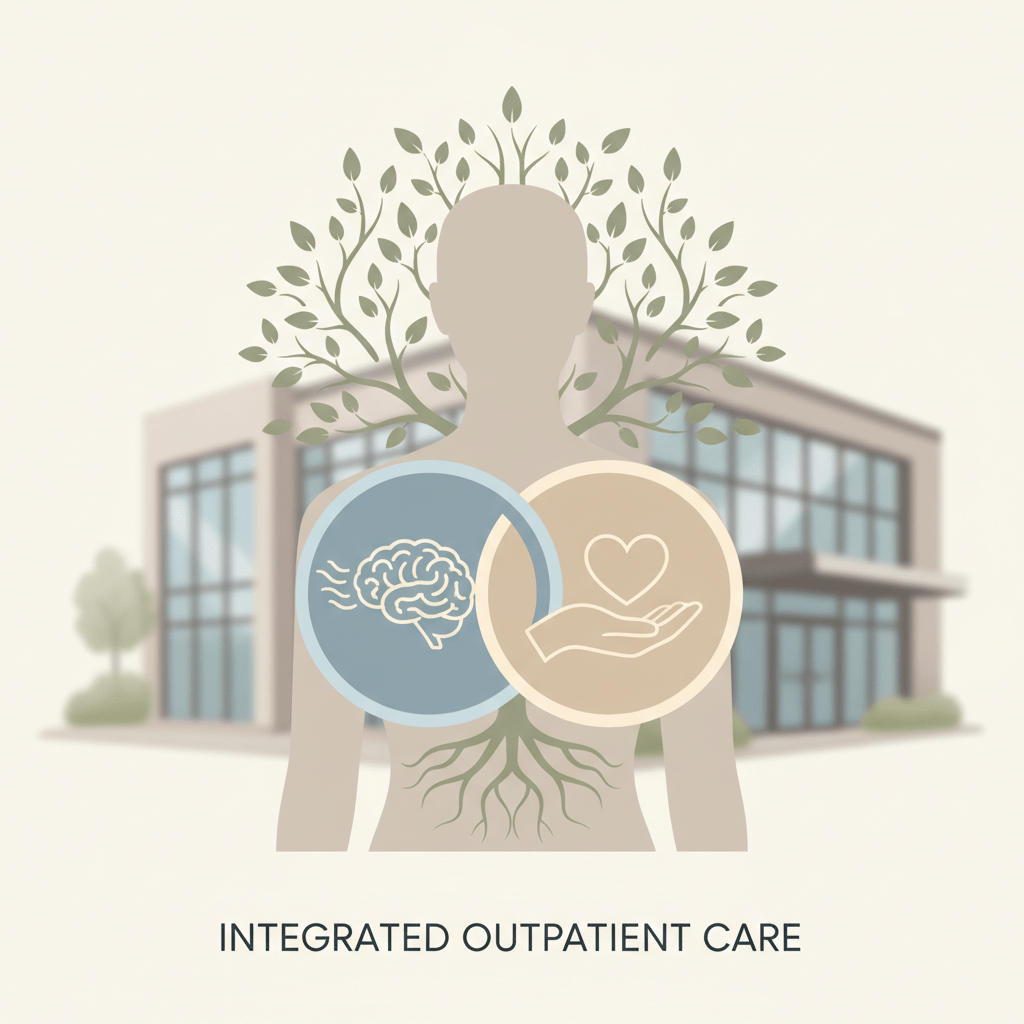
When you are living with both a mental health condition and a substance use disorder, it can feel like you are fighting two battles at once. Integrated treatment for addiction and mental health brings those battles into one coordinated plan so you are not pulled in different directions.
Instead of seeing one provider for therapy and another for addiction, who rarely speak to each other, integrated care combines services in a single, unified approach. Your care team looks at how your depression, anxiety, bipolar disorder, PTSD, or other condition interacts with your alcohol or drug use, then creates one plan that addresses both at the same time.
Research has consistently shown that treating co occurring mental health and substance use conditions together is more effective than trying to manage each one separately. Integrated treatment that combines psychotherapy and medications in a coordinated way has been found to be superior to treating each disorder in isolation, especially for people with more severe symptoms and complex needs [1].
If you are exploring a treatment for co occurring mental health and addiction option, understanding how integrated care works can help you choose a program that truly supports your healing.
Why treating both conditions together matters
When you live with both a mental health condition and addiction, the two conditions typically feed into each other. Ignoring one often makes the other worse.
For example, someone with untreated depression may drink to numb painful feelings. Alcohol affects the same brain systems that are disrupted in depression, which can temporarily lift mood and then deepen the underlying problem. This cycle of self medication is common in co occurring disorders [2].
Large national surveys estimate that about one third of people with a substance use disorder also live with a mental illness at the same time [2]. Other data suggest that nearly half of people with a substance use disorder will experience a mental health condition at some point in their lives [3]. When conditions are this intertwined, trying to treat only the addiction or only the depression or anxiety usually leads to:
- Persistent symptoms that never fully improve
- Higher risk of relapse after periods of sobriety
- More frequent crises and hospitalizations
- Frustration with treatment that feels incomplete
Integrated care targets this overlap directly. It recognizes that your mental health symptoms are not an afterthought or a side issue, they are central to your recovery. Programs that offer co occurring disorder treatment outpatient create space for you to work on both sides of the problem in one continuous process.
How integrated outpatient dual diagnosis treatment works
Integrated outpatient care is designed to balance clinical support with your everyday responsibilities. Rather than staying in a hospital or residential setting, you attend structured treatment sessions during the week and return home at night.
A typical dual diagnosis outpatient treatment program weaves together several elements so you receive consistent, coordinated support.
Unified assessment and diagnosis
Your healing starts with a thorough assessment that looks at:
- Current substance use and history of addiction
- Mental health symptoms and past diagnoses
- Medical conditions and medications
- Trauma history and significant life events
- Social, family, and work or school stressors
Integrated programs use standardized tools and careful screening to identify co occurring disorders, something that is often missed in general medical or mental health settings [4]. From there, your team builds one treatment plan with clear, shared goals instead of competing recommendations.
One coordinated care team
In effective integrated treatment, you are not expected to juggle separate providers on your own. A coordinated team often includes:
- A psychiatrist or psychiatric nurse practitioner
- Master’s level therapists who specialize in dual diagnosis
- Case managers or care coordinators
- Sometimes peer support specialists with lived experience
These professionals share information, adjust plans together, and communicate regularly about your progress. This kind of collaboration has been linked to better clinical and functional outcomes when programs adhere to evidence based integrated principles [5].
A level of intensity that matches your needs
Integrated outpatient care can be offered at different levels, such as an intensive outpatient program (IOP) with multiple sessions per week or a more traditional weekly therapy format. Research highlights that people with co occurring disorders often benefit from longer and higher intensity treatment, combined with ongoing monitoring and support in the community [1].
If you need focused support but also want to maintain work, school, and family responsibilities, an outpatient rehab for dual diagnosis can be a strong fit.
Core therapies used in integrated treatment
Several evidence based therapies form the foundation of integrated treatment for addiction and mental health. These approaches are adapted so they address both your substance use and your emotional wellbeing at the same time.
Cognitive behavioral therapy (CBT)
CBT helps you identify and change the patterns of thinking and behavior that keep you stuck. In an integrated setting, CBT is used to:
- Notice how certain thoughts or moods trigger urges to drink or use
- Challenge beliefs like “I cannot handle this without substances”
- Build alternative coping strategies for stress, shame, and anxiety
- Practice new behaviors in real life situations
A review of dual diagnosis treatment found that CBT skills like mindfulness, self regulation, cognitive restructuring, and motivational interviewing significantly support change for people with co occurring conditions, in both integrated and non integrated models [6].
Motivational interviewing (MI)
If part of you wants to change and part of you is not sure, you are not alone. Motivational interviewing is designed for this kind of ambivalence. Rather than pressuring you, your therapist helps you explore:
- What matters most to you in life
- How your current use supports or conflicts with those values
- Your own reasons for change, at your own pace
MI is a scientifically supported approach in integrated addiction treatment and has been shown to help people resolve inner conflicts about changing substance use, instead of simply trying to convince them to stop [2].
Trauma informed and PTSD focused therapies
Many people with addiction and mental health conditions have lived through trauma. Integrated programs use trauma informed care that emphasizes physical, psychological, and emotional safety, and that recognizes substances are sometimes used to numb overwhelming feelings [2].
For those with PTSD and substance use disorders, phased integrated approaches have shown promising results. Typically, treatment first stabilizes substance use, then moves into trauma focused therapies like imaginal exposure or group programs such as Seeking Safety. This sequence can reduce both PTSD symptoms and substance use over time [1].
Mindfulness and skills training
Mindfulness based strategies help you observe urges, emotions, and thoughts without automatically reacting to them. In integrated care, you may also learn:
- Distress tolerance skills for riding out cravings
- Emotion regulation tools for intense mood swings
- Interpersonal skills for setting boundaries and rebuilding trust
These skills are especially useful when you are balancing recovery with the demands of work, family, or school.
Psychiatric support and medication management
For many people, medication is a key part of integrated treatment for addiction and mental health. The goal is not to “medicate away” your experience, but to use medications thoughtfully to stabilize symptoms so that therapy and lifestyle changes can work better.
Integrated programs often combine:
- Medications for mental health conditions, such as antidepressants or mood stabilizers
- Medications for substance use disorders, when appropriate, such as those that reduce cravings or support abstinence
Studies of pharmacotherapy in people with both alcohol use disorder and mental health conditions generally show modest improvements when medication is combined with therapy, rather than used alone. Medication by itself often has limited impact on substance use, which is why a combined approach is recommended [4].
In a coordinated setting, your prescriber works closely with your therapist so that:
- Medication decisions are informed by your therapy progress
- Side effects or concerns are addressed quickly
- Changes are made with your full understanding and input
If you are looking for a mental health and addiction treatment program that includes psychiatric care, it can help to ask how often you will meet with a prescriber and how medication decisions are communicated across the team.
Benefits of integrated outpatient care for you
Choosing integrated outpatient care means you receive clinically sophisticated help while staying connected to your real life. This approach offers several benefits when you are dealing with co occurring disorders.
One plan, one message
You do not have to manage conflicting advice or retell your story every time you see a different provider. Instead, you have:
- A single treatment plan that everyone on your team follows
- Shared goals that cover both sobriety and mental health
- Consistent guidance that reduces confusion and mixed messages
This kind of coordination has been linked to better long term stability and lower rehospitalization rates when paired with ongoing case management and follow up [1].
Support that fits your everyday life
With outpatient integrated care, you practice new skills in the same environment where you live, work, and relate to others. This can:
- Make it easier to apply coping skills to real stressors
- Allow you to stay engaged in work or school
- Involve family or significant others more easily in treatment
Programs like an outpatient program for depression and addiction or anxiety and substance abuse treatment outpatient track are built to support this kind of real world healing.
Reduced relapse risk
When your mental health is stabilized and you have tools for managing symptoms, you are less likely to return to substances as a way to cope. Integrated care that addresses both depression or anxiety and substance use has been found to improve psychiatric symptoms and reduce relapse risk, particularly for conditions like PTSD [6].
Programs that, like River’s Bend, use unified plans for both mental health and addiction have reported lower relapse rates and better long term outcomes compared to treating disorders separately [3].
A clear path forward
Lastly, integrated outpatient programs can offer a stepped approach to care. You may start with a higher intensity schedule, then gradually step down to fewer sessions as you gain stability. This continuity supports you through early recovery and into long term maintenance.
What to look for in an integrated outpatient program
Not all outpatient programs that mention “dual diagnosis” offer truly integrated care. As you evaluate your options and consider the best dual diagnosis outpatient rehab for your needs, it can help to ask specific questions.
You might ask:
- Do the mental health and addiction providers work on one shared treatment plan?
- How often does the team communicate about my care?
- Are evidence based therapies like CBT, motivational interviewing, and trauma informed approaches built into the program?
- Is there psychiatric care available on site or closely coordinated?
- How are co occurring disorders screened and diagnosed at intake?
- What ongoing support is available after the most intensive phase of treatment ends?
It can also be important to understand how the program works with your insurance. Many people with co occurring disorders struggle to access integrated services. As of 2017, only about 8.3% of adults with both a mental health condition and a substance use disorder in the United States received fully integrated care [4]. A dual diagnosis therapy program covered by insurance can help remove some of the financial barriers that keep people from getting the level of help they need.
How Dedicato supports your dual diagnosis recovery
At Dedicato, integrated treatment for addiction and mental health is at the core of what you receive in our outpatient services. If you are seeking a co occurring disorder treatment outpatient program, you can expect:
- Comprehensive assessment that looks closely at both your substance use and your mental health
- A unified care plan developed by a coordinated team of clinicians
- Evidence based therapies like CBT, motivational interviewing, and trauma informed approaches
- Access to psychiatric evaluation and careful medication management
- Structured outpatient schedules that respect your work, school, and family commitments
Our dual diagnosis outpatient treatment program is designed to help you stabilize, gain skills, and build a life that does not revolve around substances or unmanaged symptoms. Whether you are dealing with depression and alcohol use, anxiety and prescription medications, or another combination of challenges, treatment is tailored to your specific situation.
Healing from co occurring disorders takes time, structure, and support. You do not need to handle one condition first and hope the other will sort itself out. With integrated care, you can address the full picture of what you are facing and move toward lasting change.
If you are ready to explore your options, you can reach out to learn more about our mental health and addiction treatment program and how integrated outpatient care can support your recovery.
References
- (NCBI PMC)
- (NAMI)
- (Rivers Bend)
- (PMC)
- (PubMed)
- (Health SA Gesondheid)