Understanding IOP programs for mental health and substance abuse
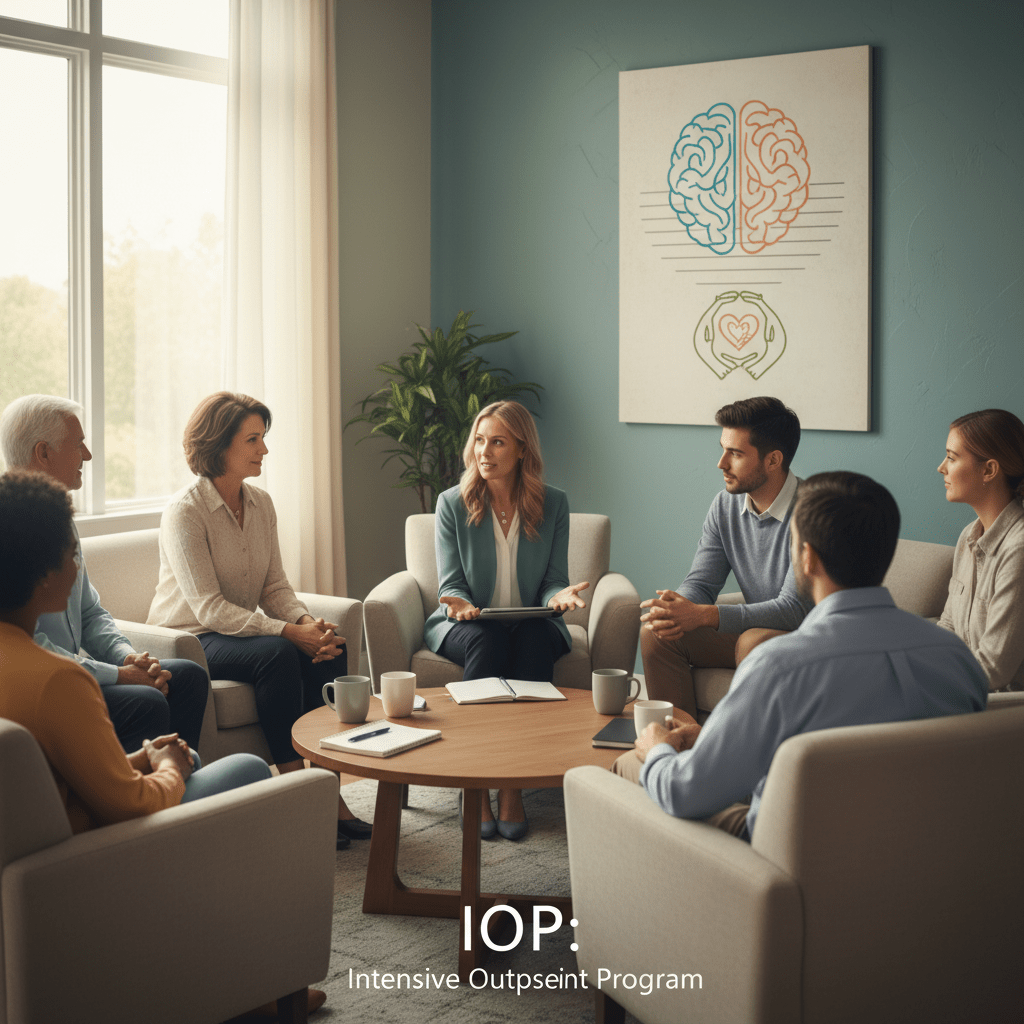
If you are looking for more support than weekly therapy, but you are not able or ready to step away from your life for residential care, an IOP program for mental health and substance abuse can provide a middle path. Intensive Outpatient Programs (IOPs) offer multiple therapy sessions each week while still allowing you to live at home, care for your family, and keep working or going to school.
In an IOP, you typically attend at least 9 hours of treatment per week, often structured as three 3 hour sessions that combine individual and group services [1]. This level of care is designed for people who need structured help managing addiction, mental health symptoms, or both, but who do not require 24 hour supervision or medical detoxification.
By understanding how IOPs work, who they are for, and what you can expect, you can decide whether this level of care fits your needs and next steps in recovery.
How an IOP program works day to day
An IOP program for mental health and substance abuse follows a set weekly rhythm that blends structure with flexibility. You commit to consistent sessions, but you return home each day to practice what you are learning in real time.
Typical weekly schedule and structure
Most IOPs follow national guidelines that recommend at least 9 hours of care per week, often arranged as three 3 hour days of programming [1]. Some programs offer more intensive schedules, especially early in treatment.
A typical IOP week might include:
- Several group therapy sessions
- One individual counseling session
- Family or couples therapy when appropriate
- Psychoeducation classes on addiction, mental health, and coping skills
- Medication management or psychiatric appointments if needed
- Random drug and alcohol screenings
Sessions can take place in hospitals, rehab centers, community mental health clinics, or dedicated treatment facilities [1]. Many programs now also provide virtual or hybrid options that can increase access if you live far from a treatment center or need additional flexibility.
If you are comparing an IOP to a standard outpatient program, it helps to understand that IOP offers far more frequent contact, accountability, and clinical intensity. You can explore those differences in more detail in resources like iop vs outpatient rehab program.
Core therapeutic components you receive
IOPs use evidence based therapies that target both substance use and mental health symptoms. Depending on your needs, your treatment plan may include:
- Individual counseling to explore personal history, trauma, and relapse patterns
- Group therapy that focuses on skills, peer feedback, and shared accountability
- Cognitive behavioral therapy (CBT) to identify and change unhelpful thoughts and behaviors [1]
- Motivational interviewing to strengthen your internal reasons for change
- 12 step facilitation or alternative recovery models
- Psychoeducation sessions that explain how addiction, depression, anxiety, and trauma affect the brain and body
- Family services to involve your partner, parents, or other loved ones in your recovery
- Case management and help coordinating community resources
- Drug and alcohol monitoring to support abstinence or harm reduction goals [1]
If you are working specifically on substance use, you may also join a focused intensive outpatient program for addiction or iop treatment for drug and alcohol addiction that integrates these same modalities with addiction specific supports.
Why you might choose IOP over other levels of care
When you are deciding on a level of care, you are balancing two priorities. You want enough structure to feel safe and make real progress, but you also want to maintain your life, responsibilities, and independence. For many, an IOP program for mental health and substance abuse offers that balance.
A middle ground between inpatient and weekly therapy
Compared to inpatient or residential treatment, IOPs:
- Allow you to live at home rather than in a facility
- Let you maintain employment or school with a flexible schedule
- Offer privacy if you do not want to disclose a residential stay
- Cost significantly less than 24 hour programs while still providing intensive services [1]
Compared to weekly outpatient therapy, IOPs provide:
- Far more frequent contact with clinicians
- Multiple opportunities each week to learn and practice coping skills
- Stronger accountability around attendance and sobriety
- Structured relapse prevention work and crisis planning
- Peer support through small, consistent groups
Research shows that substance abuse IOPs can achieve outcomes comparable to inpatient or residential treatment for many people, with similar reductions in drug and alcohol use and improvements in overall functioning over time [2]. This means that, in the right circumstances, you can receive effective care without stepping away from your everyday life.
If you know you want a stronger level of care for addiction but also need flexibility, exploring a flexible intensive outpatient rehab program can help you see what is possible.
Transition support after detox or residential care
IOPs are often used as a step down from higher levels of care such as medical detox, residential rehab, or partial hospitalization. When you leave a 24 hour setting, you are suddenly back in an environment that may include triggers, stress, and less direct supervision.
An IOP allows you to:
- Maintain structure and professional support several days a week
- Practice coping skills in your real environment and bring challenges back to group
- Adjust medications and treatment plans as your daily life changes
- Build a longer term relapse prevention and mental health stability plan
Studies of IOPs for substance use have found that individuals tend to maintain improvements for months after completing treatment, especially when care is part of a continuing recovery model [2]. For many, IOP serves as a bridge that turns short term gains into lasting change.
Who is a good fit for an IOP program
Not everyone is best served by an IOP. Some people need more intensive, around the clock support, while others may do well in less structured outpatient care. Knowing whether you are a likely candidate can clarify your options.
Clinical and practical criteria
You may be a good fit for an IOP program for mental health and substance abuse if you:
- Are medically stable and do not need 24 hour monitoring or detoxification [1]
- Have a stable, substance free place to live or can access supportive housing
- Have reliable transportation or internet access for in person or virtual care
- Feel motivated, even if ambivalent, to work on your mental health or substance use
- Can safely manage current mental health symptoms without inpatient care
- Do not have uncontrolled medical conditions that require hospital level support [1]
If you are dealing with both mental health symptoms and substance use, you may benefit from a structured iop for dual diagnosis treatment. Dual diagnosis programs intentionally address both conditions at the same time, which can reduce relapse and symptom flare ups.
When a higher level of care might be safer
Research on IOPs suggests that outcomes are generally similar to inpatient treatment, but individuals with more severe substance use or recent suicidal ideation may sometimes do better in residential or hospital based care [2]. You should consider a higher level of care if you:
- Have recently attempted suicide or have strong, active suicidal thoughts
- Experience severe, uncontrolled withdrawal symptoms
- Cannot maintain safety from self harm or harm to others on your own
- Have medical conditions that could become unstable without 24 hour care
- Lack any safe, supportive place to live
In these situations, starting with detox, inpatient, or a partial hospitalization program, then stepping down to IOP, may be a safer and more effective path.
If you are not sure which level is appropriate, you can contact SAMHSA’s National Helpline at 1 800 662 HELP (4357) for free, confidential information and treatment referrals at any time of day [3].
What you gain from IOP: benefits and outcomes
A well structured IOP program for mental health and substance abuse does more than simply increase the number of therapy hours. It gives you a comprehensive recovery framework that you can use long after formal treatment ends.
Consistent accountability and support
The intensive structure of IOP means that you:
- See clinicians and peers several times per week
- Have regular check ins about cravings, urges, and mood symptoms
- Receive feedback and guidance when you face setbacks
- Build a community of people who understand what you are working through
This level of contact reduces isolation, which is a known risk factor for both relapse and worsening depression or anxiety. It also increases your chances of catching problems early, before they turn into full crises.
Many IOPs include regular drug and alcohol screenings, which can strengthen your external accountability as you work on building your internal motivation for change [1].
Real life skill building and practice
Because you remain in your home, work, school, and community while attending IOP, you have the opportunity to:
- Apply coping strategies directly to real stressors
- Test new communication skills in your relationships
- Identify specific triggers in your environment
- Adjust your relapse prevention plan based on real experiences
This continuous feedback loop is one of the core strengths of IOP. You do not have to wait until discharge to discover which skills are realistic for your life. Instead, you can bring challenges back to the group, refine your tools, and return to try again.
Programs like Charlie Health’s virtual IOP have reported that a large majority of clients see improvements in depression, anxiety, and self harm behaviors during treatment [4]. While individual results vary, these findings highlight how structured, repeated practice of coping skills can support meaningful symptom change.
Integrated care for co occurring conditions
Many people entering IOP are living with more than one diagnosis. You might be managing depression and alcohol use, trauma and opioid misuse, bipolar disorder and cannabis use, or other combinations.
Effective IOPs:
- Screen for co occurring disorders at intake
- Coordinate therapy, medication management, and case management
- Address both mental health and substance use in groups, rather than treating them in isolation
- Include family education about how conditions interact
Although one large review found that most IOPs studied did not yet include pharmacotherapy, the authors noted that integrating medications with behavioral treatments could enhance outcomes within recovery oriented care models [2]. When you evaluate programs, it is worth asking how they coordinate psychiatric care and whether they can support medication assisted treatment if appropriate for you.
Balancing treatment with work, school, and family
One of the main reasons to choose an IOP program for mental health and substance abuse is the ability to protect your recovery without sacrificing your responsibilities and identity outside of treatment.
Flexible scheduling and evening programs
Many IOPs offer daytime, evening, or even weekend options to accommodate different lifestyles. For example, an evening iop program for professionals can allow you to:
- Work standard business hours
- Attend treatment after work
- Maintain your role and income while you focus on recovery
- Reduce explanations you have to give to colleagues or clients
If you are a parent or caregiver, flexible scheduling means you can attend sessions while children are in school or after another adult is home. A flexible intensive outpatient rehab program may coordinate start times, session lengths, and telehealth options to fit around daily routines rather than disrupt them.
IOP as part of community based recovery
Remaining in your community while in treatment helps you build a local support system that can last after the program ends. You can connect with:
- Local mutual help groups such as 12 step meetings or alternatives
- Community mental health resources
- Faith or cultural organizations that support your values
- Peer recovery coaches or mentors
Research indicates that one advantage of IOPs is that individuals remain in their homes and communities, which may improve community adjustment [2]. You are not starting over in a new place once treatment ends, you are continuing in the environment where your recovery needs to work long term.
If you live in California or a similar region with a strong treatment network, you might explore an outpatient rehab iop program california to see what community based options are available near you.
Practical considerations: cost, insurance, and access
Finances and logistics are often a deciding factor when you consider treatment. Understanding typical IOP costs and coverage can help you plan.
Cost and insurance coverage
The cost of an IOP varies by location, intensity, and included services. In many areas, you can expect:
- Daily rates around 200 to 500 dollars or more, depending on services
- Monthly costs typically in the range of 3,000 to 10,000 dollars for full time participation [1]
Most health insurance plans, including many Medicaid and Medicare options, classify IOP as a covered behavioral health service [1]. Your out of pocket responsibility depends on:
- Deductibles and copays
- Network status of the provider
- Any visit limits within your plan
- Preauthorization or medical necessity requirements
You can learn more about how coverage often works in resources like iop covered by insurance for addiction treatment. It is always wise to verify benefits directly with both your insurer and the program you are considering so that you are not surprised by bills later.
If you are uninsured or underinsured, SAMHSA’s National Helpline can connect you to state funded or sliding scale programs in your area [3]. You can call 1 800 662 HELP (4357) or text your ZIP code to 435748 (HELP4U) to ask about options.
Access through in person and virtual IOPs
Geography used to be a major barrier if you lived far from a treatment center. Today, many organizations offer telehealth IOPs that you can join from home. For example, PrairieCare in Minnesota provides IOP services both across multiple physical locations and via telehealth, which expands access for people in rural communities or those with limited transportation [5].
Virtual IOPs such as Charlie Health’s model also demonstrate that structured online care can be effective for depression, anxiety, trauma, suicidal thoughts, and substance use disorders when programs are carefully designed and outcomes are tracked [4]. When you compare options, you may want to weigh the benefits of in person connection against the convenience and accessibility of telehealth, or consider hybrid models that include both.
If you are seeking the best intensive outpatient program for addiction for your situation, looking at both in person and virtual offerings can help you find the right clinical fit and logistical match.
How to evaluate and choose an IOP
Once you decide that an IOP program for mental health and substance abuse fits your needs, the next step is choosing a specific program. Not all IOPs offer the same level of specialization, quality, or flexibility.
Questions to ask potential programs
When you call or visit, you can ask:
- What conditions do you treat, and do you specialize in co occurring mental health and substance use disorders
- How many hours per week are required and over what length of time
- What is the typical group size
- What therapies do you use, and are they evidence based
- Are psychiatrists or nurse practitioners involved in care
- Do you offer evening or weekend groups
- How do you involve families or support persons
- How do you handle relapse or crisis situations
- How do you help clients transition to lower levels of care after IOP
You might also want to know whether the program is part of a broader continuum, such as detox, residential, and outpatient, in case your needs change. A program that understands how to coordinate with other levels of care can respond more quickly if you need to step up or step down.
Matching program features to your life
Your decision should reflect both clinical needs and real world constraints. For example:
- If you are a working professional, an evening iop program for professionals that respects your schedule may reduce stress and increase adherence.
- If you are focusing primarily on substance use, an iop treatment for drug and alcohol addiction can ensure your groups and education are directly relevant to your goals.
- If you are juggling parenting and caregiving responsibilities, a flexible intensive outpatient rehab program with telehealth or variable times may help you stay engaged.
You can also consider whether you feel comfortable with the staff, whether the environment feels respectful and safe, and whether you connect with the program’s approach to sobriety, harm reduction, or mental health recovery.
When you choose an IOP, you are not just choosing a schedule, you are choosing a community and a framework that will shape how you rebuild your life.
Taking your next step toward structured, flexible care
If you are ready for more support but not in a position to step away from work, school, or family, an IOP program for mental health and substance abuse can offer the structure, accountability, and clinical intensity you need while honoring your independence.
You have options. You can remain in your community, choose in person or virtual care, and tailor your schedule to your responsibilities. You can address both addiction and mental health symptoms together, build real life coping skills, and create a recovery plan that fits who you are.
If you are unsure where to begin, you can contact local providers, review resources such as outpatient rehab iop program california, or reach out to SAMHSA’s National Helpline at any time for confidential guidance [3].
You do not have to choose between getting help and keeping your life in motion. With the right IOP, you can do both, and you can take the next step toward a safer, more stable future.