Understanding outpatient depression treatment
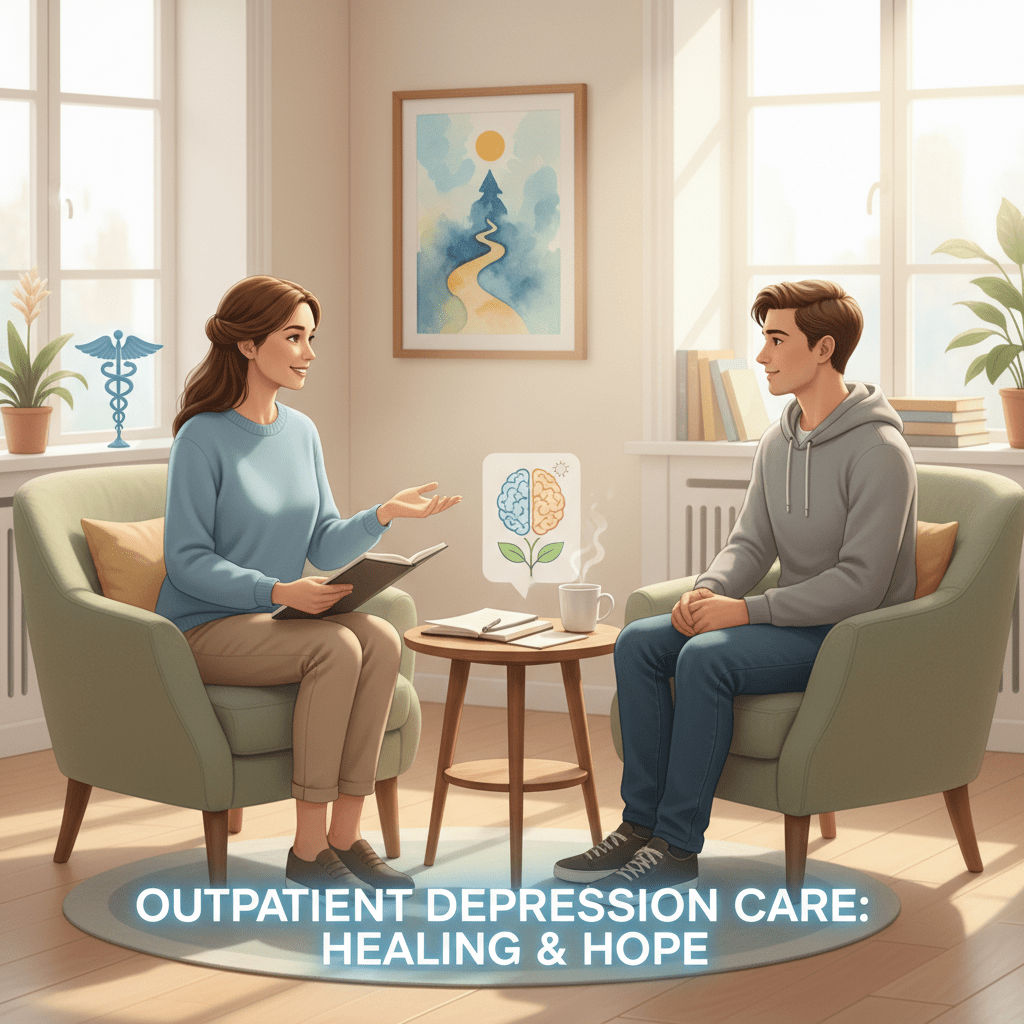
If you are living with depression or mood instability, you may need more than a weekly therapy session but less than a hospital stay. An outpatient depression treatment program bridges that gap. It gives you structured, intensive care while you continue to live at home and maintain your daily responsibilities.
In an outpatient setting, you usually attend multiple therapy sessions each week, meet with a psychiatrist for medication management, and participate in skills based groups that help you stabilize symptoms and build healthier routines. You receive focused support for your mood symptoms, and if you are also dealing with addiction, you can access integrated care that addresses both conditions together.
Research on intensive outpatient depression programs has found that they can be as effective as inpatient care for many people. In one study of the Bielefeld Outpatient Intensive Treatment Program of Depression, people in an intensive outpatient program showed strong symptom improvement that was comparable to those in an inpatient hospital program, with no significant difference in overall effectiveness between the two groups [1]. This means you may be able to find relief without putting your entire life on hold.
How an outpatient program works
Outpatient programs are structured and specific. You are not left to figure things out on your own. Instead, you follow a clear plan that usually includes assessment, therapy, medication support, and ongoing monitoring of your progress.
Initial assessment and diagnosis
Your outpatient depression treatment program typically begins with a comprehensive intake. During this process, you can expect:
- A detailed review of your symptoms and history
- Screening for bipolar disorder and other mood disorders
- Questions about substance use, trauma, medical conditions, and medications
- A discussion of your goals and what you hope to change
This evaluation helps your team identify whether you are dealing with major depressive disorder, bipolar depression, or another mood condition. Some programs, such as the UCLA Dual Diagnosis Intensive Outpatient Program, offer a formal expert assessment by psychiatrists specifically trained to evaluate co occurring addiction and psychiatric disorders [2].
If you have both mood symptoms and substance use challenges, you may benefit from a dual diagnosis depression treatment outpatient track or a combined outpatient program for bipolar and substance abuse.
Building your individualized treatment plan
After the assessment, your team creates a plan that outlines:
- How often you attend groups and individual sessions
- Which therapies will be used
- Whether you need medication or medication adjustments
- How your progress will be measured over time
You and your providers work together to make sure the plan feels realistic and aligned with your life. This kind of structured outpatient mental health care allows you to receive intensive support while you stay engaged in work, school, and family life.
Typical weekly schedule
While every program is different, many intensive outpatient programs (IOPs) for depression include several sessions per week. For example, the UCLA Dual Diagnosis IOP runs for 8 weeks and offers daily group therapy, along with weekly individual therapy and medication management for co occurring addiction and mood disorders [2].
A typical week in an outpatient depression treatment program might involve:
- 3 to 5 days of group therapy and skills training
- 1 individual therapy session
- 1 medication management visit or check in
- Optional family sessions or psychoeducation groups
This level of structure helps you practice new coping strategies in real time, then bring your experiences back to the group to process and adjust.
Core therapies in an outpatient depression program
Effective outpatient programs rely on evidence based treatments that target both your symptoms and the patterns that keep them going. You are not just talking about how you feel, you are learning how to respond differently.
Cognitive behavioral therapy and related approaches
Cognitive Behavioral Therapy (CBT) is one of the most studied treatments for depression and is widely used in outpatient settings. A large review of 409 trials with more than 52,000 participants found CBT to be a highly effective first line treatment for depression, even though it is not necessarily superior to all other forms of talk therapy [3].
In CBT and related therapies, you learn to:
- Notice and challenge unhelpful thoughts
- Break patterns of avoidance and withdrawal
- Build small, realistic behavior changes that lift mood over time
- Identify triggers and plan specific responses
Many programs combine CBT with other approaches, such as:
- Dialectical Behavior Therapy (DBT) skills for emotion regulation
- Interpersonal therapy that focuses on relationships and life transitions
- Mindfulness based strategies that help you manage rumination and stress
If you are looking for a focused therapy for depression outpatient program, make sure to ask which evidence based approaches are included.
Group therapy and peer support
Group therapy is a central part of most outpatient programs for depression. Research on intensive outpatient programs highlights the role of group sessions in reducing isolation and fostering accountability, especially when people share similar challenges [4].
In group settings, you can:
- Hear how others cope with similar mood swings, stressors, and setbacks
- Practice communication skills in a supportive environment
- Receive feedback, encouragement, and honest reflection
- Build a network of peers who understand what you are going through
These groups are typically led by licensed therapists who guide discussion, teach skills, and make sure the space remains safe and respectful.
Medication management and psychiatric support
For many people, the most effective outpatient depression treatment program combines therapy and medication. You might already be taking antidepressants or mood stabilizers, or you may be considering them for the first time.
Common medications used in outpatient depression treatment include:
- Selective serotonin reuptake inhibitors (SSRIs)
- Serotonin norepinephrine reuptake inhibitors (SNRIs)
- Mood stabilizers such as lithium or anticonvulsants for bipolar disorder
- Occasionally atypical antipsychotics as augmentation, depending on your diagnosis
Talk therapy combined with SSRIs and SNRIs has been shown to significantly improve depressive symptoms in outpatient care [3]. In many programs, a psychiatrist or psychiatric nurse practitioner meets with you regularly to adjust doses, manage side effects, and coordinate your overall plan.
If you live with bipolar disorder, a dedicated bipolar disorder outpatient treatment program can ensure that your medication strategy and therapy focus are tailored to mood cycling and not just unipolar depression.
Holistic and skills based support
Depression affects every part of your life, not only your mood. Effective programs address this by adding education, life skills, and holistic practices that support long term recovery.
Psychoeducation and life skills
Most intensive outpatient programs include psychoeducation, which is structured teaching about:
- How depression, bipolar disorder, and anxiety work in the brain
- The role of sleep, nutrition, and exercise in mood stability
- Early warning signs of relapse or mood episodes
- Communication and boundary setting with family and friends
Programs like the intensive outpatient depression services at Rise Above include life skills training in areas such as stress management, communication, and self care, all aimed at helping you function more effectively day to day [4].
Mindfulness, creativity, and holistic care
You may also have access to holistic options that complement your core therapies, for example:
- Mindfulness and meditation practices
- Breathwork and grounding exercises
- Creative groups such as art or music therapy
- Yoga or gentle movement to reconnect with your body
These services are not a replacement for evidence based treatment, but they can make it easier for you to regulate emotions, reduce stress, and stay engaged in the process.
Integrating depression and addiction treatment
Depression and addiction often go hand in hand. You might use alcohol or drugs to numb feelings of hopelessness or anxiety, or your substance use may have triggered or worsened your mood symptoms over time.
A dual diagnosis outpatient program is designed specifically for this overlap. The UCLA Dual Diagnosis Intensive Outpatient Program, for example, combines daily group therapy, weekly individual sessions, and medication management to address addiction and co occurring mood disorders at the same time [2].
In an integrated setting, you can expect to focus on:
- Cravings and triggers, alongside depression or bipolar symptoms
- Safe coping strategies that do not rely on substances
- How withdrawal and substance effects interact with mood and sleep
- Relapse prevention that includes both sobriety and mood stability
If you need help with both mood and substance use, you may benefit from therapy for mood disorders and addiction or a comprehensive outpatient program for bipolar and substance abuse. Addressing both conditions together usually leads to better, more sustainable outcomes than treating them separately.
When addiction and depression are treated in the same program, you are less likely to fall into the cycle of improving in one area only to relapse in another.
Benefits of choosing outpatient care
It can be difficult to decide between inpatient and outpatient treatment. Understanding the advantages of a structured outpatient program can help you determine what fits your situation.
Flexibility with daily life
Outpatient care allows you to keep living at home while attending intensive treatment. According to descriptions of intensive outpatient services, this model is designed to help you maintain your work, school, and family roles while still receiving frequent therapy and skill building sessions [4].
This flexibility may be especially important if you:
- Care for children or other family members
- Need to maintain employment or schooling
- Have a stable home environment and support system
You can attend your scheduled sessions, then immediately apply what you learn in your real world environment, which often accelerates progress.
Clinical effectiveness and symptom relief
You might worry that outpatient care is less effective than inpatient treatment. However, research on intensive outpatient programs for depression paints a different picture.
In the Bielefeld study, people in an intensive outpatient depression program improved just as much as those in a traditional inpatient unit, with large treatment effects in both groups after six weeks [1]. There were no significant differences in symptom reduction between the two settings, and the outpatient group actually had higher response rates on some depression measures.
If you are safe at home and do not require 24 hour monitoring, a robust outpatient depression treatment program can offer a similar level of clinical benefit while giving you more autonomy.
Cost and insurance considerations
Because outpatient programs do not include overnight stays, they are often more affordable than inpatient hospitalization. Many insurance plans cover a range of outpatient services, including therapy, medication management, and group sessions.
If you are wondering how coverage works, exploring options for depression therapy covered by insurance can help you understand your benefits, typical copayments, and any preauthorization requirements. The admissions team at most programs can also help verify insurance and discuss payment plans if needed.
Is outpatient treatment right for you
Outpatient care is not the best fit for everyone. Your safety, support system, and symptom severity all matter. It is important to think honestly about how you are doing day to day and what you need to stay safe.
You may be a good candidate for an outpatient depression treatment program if you:
- Are experiencing significant depression or mood instability
- Can safely manage at home without 24 hour supervision
- Are medically stable and do not need inpatient detox
- Are willing to attend frequent sessions and engage actively
- Have at least some level of support from family, friends, or community
In contrast, inpatient treatment or a higher level of care may be more appropriate if you are at immediate risk of harming yourself or others, cannot care for your basic needs, or need intensive medical monitoring.
If you are living with a mood disorder but are not sure what level of care you need, exploring mental health treatment for mood disorders outpatient can give you a clearer picture of options, from weekly therapy to intensive programs.
What to look for in a quality program
Not all programs are the same. When you are comparing options, it can help to look for specific features that support stabilization, safety, and long term recovery.
| What to look for | Why it matters |
|---|---|
| Comprehensive assessment and clear diagnosis | Ensures your depression, bipolar disorder, or co occurring addiction are correctly identified |
| Evidence based therapies like CBT and group work | Increases the likelihood of meaningful symptom improvement [3] |
| Regular psychiatric and medication support | Helps you find and maintain the right medication plan |
| Dual diagnosis expertise if you use substances | Addresses addiction and mood symptoms together for better outcomes [2] |
| Skills training and relapse prevention planning | Equips you for life after the program ends |
| Coordination with your primary providers | Supports continuity of care and smoother transitions |
When you find a program that offers this kind of structure, you move closer to the best outpatient program for depression recovery for your specific needs and goals.
Taking your next step toward relief
If you are considering outpatient treatment, you are already taking an important step by looking for support. Depression and mood disorders can make it hard to believe change is possible, yet research and clinical experience both show that the right outpatient depression treatment program can lead to meaningful, lasting improvement.
You do not have to choose between doing everything alone and being hospitalized. With a structured outpatient program, you can:
- Stabilize your mood in a safe, supportive environment
- Learn concrete skills that help you manage symptoms
- Address addiction and mental health together if needed
- Stay connected to your home, work, and relationships
From focused therapy for depression outpatient program options to comprehensive dual diagnosis tracks, you can find a level of care that fits your life and your needs. Reaching out for an assessment can clarify your options and help you move toward the stability and relief you deserve.